Elephant Activities in Thailand: Choices, Welfare Standards, and Responsible Tourism
Last updated: 3 Feb 2026
807 Views
Thailand has established clear standards and guidelines for elephant care.
At present, elephant camps are encouraged to follow the Elephant Camp Standards (มก.อช.) developed by the National Bureau of Agricultural Commodity and Food Standards (ACFS). These standards serve as a reference framework and practical guideline for elephant facilities across the country. They cover various types of camps, including tourism-based, conservation-focused, and educational centers, with emphasis on rest periods, health checks, food and water management, living environments, and overall safety for elephants.
At the same time, Thailand also enforces the Animal Cruelty Prevention and Animal Welfare Act B.E. 2557 (2014), which sets legal penalties for those who fail to comply with animal-welfare principles. This law aims to raise and maintain consistent standards of animal care nationwide.
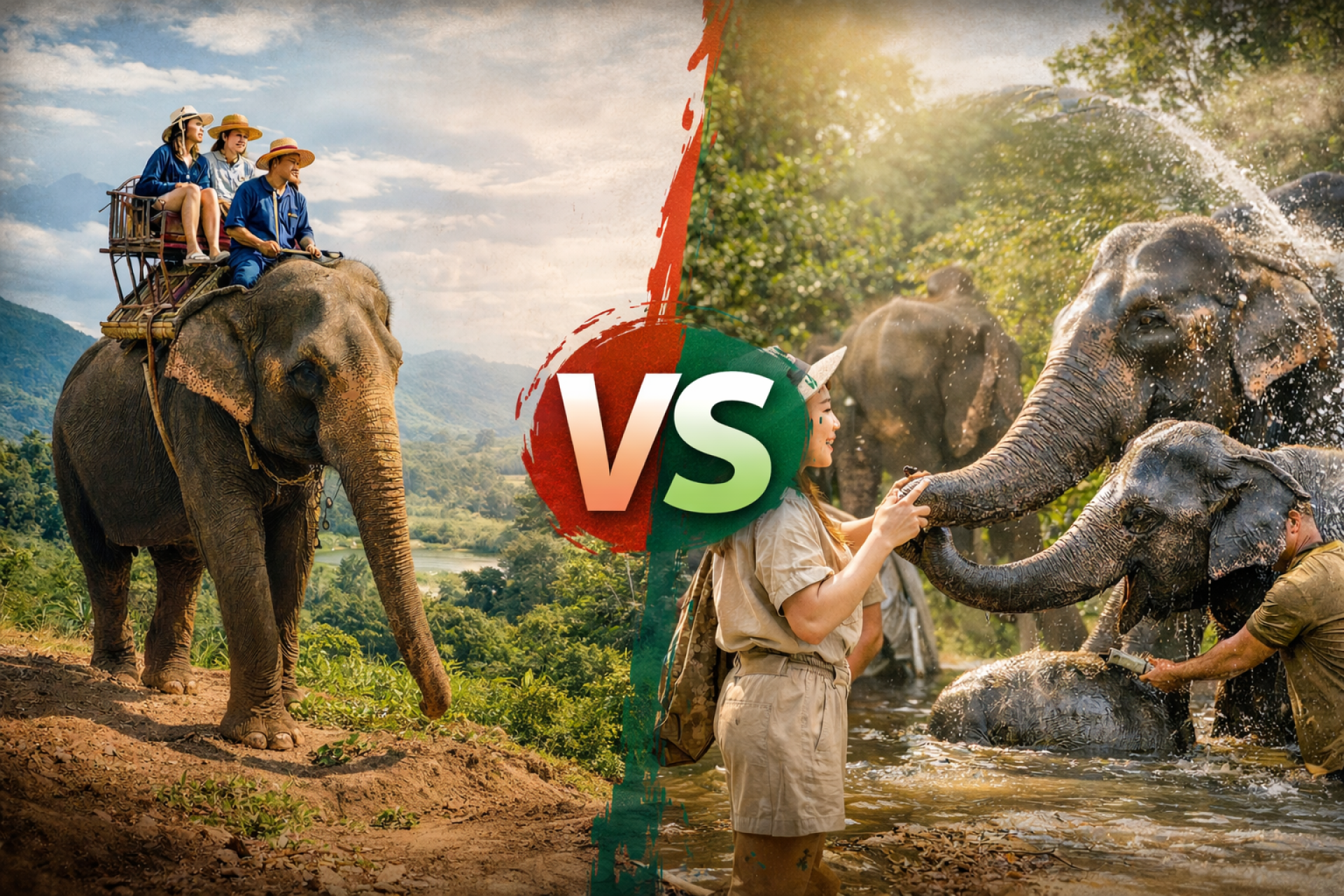
The Difference Between Riding and Non-Riding Elephant Activities
Many travelers visiting Thailand often ask which type of activity is more suitable.
Tourism experts note that elephant-related programs today come in many forms and are generally considered a personal choice, as each option provides a different kind of experience.
Riding Experience
Non-Riding Activities
At present, elephant camps are encouraged to follow the Elephant Camp Standards (มก.อช.) developed by the National Bureau of Agricultural Commodity and Food Standards (ACFS). These standards serve as a reference framework and practical guideline for elephant facilities across the country. They cover various types of camps, including tourism-based, conservation-focused, and educational centers, with emphasis on rest periods, health checks, food and water management, living environments, and overall safety for elephants.
At the same time, Thailand also enforces the Animal Cruelty Prevention and Animal Welfare Act B.E. 2557 (2014), which sets legal penalties for those who fail to comply with animal-welfare principles. This law aims to raise and maintain consistent standards of animal care nationwide.
The Difference Between Riding and Non-Riding Elephant Activities
Many travelers visiting Thailand often ask which type of activity is more suitable.
Tourism experts note that elephant-related programs today come in many forms and are generally considered a personal choice, as each option provides a different kind of experience.
Riding Experience
- Enjoy natural scenery from a higher viewpoint
- Supervised by trained and professional staff
- Time limits and weight controls are applied for safety
Non-Riding Activities
- Feeding elephants
- Bathing elephants
- Preparing vitamin balls or supplements
- Close interaction and photography
Related Content

Chokchai Elephant Camp, located in the scenic surroundings of Mae Tang, Chiangmai, Thailand, has evolved significantly in its 17-year history. Established in January 2006 by Mr. Chokchai Srisirivilai.

One common belief circulating online is that elephant care in Thailand must absolutely prohibit the use of hooks (often called elephant hooks or bull hooks) to be considered ethical and humane. However, this assumption oversimplifies how elephant welfare is actually understood in scientific, veterinary, and practical management contexts.

Chokchai and San-dee: Two majestic souls, forever bonded by friendship.


