Elephant Welfare Myth: “No Hook (No Use of Hooks) Is the Only Ethical Standard?”
Last updated: 3 Feb 2026
708 Views
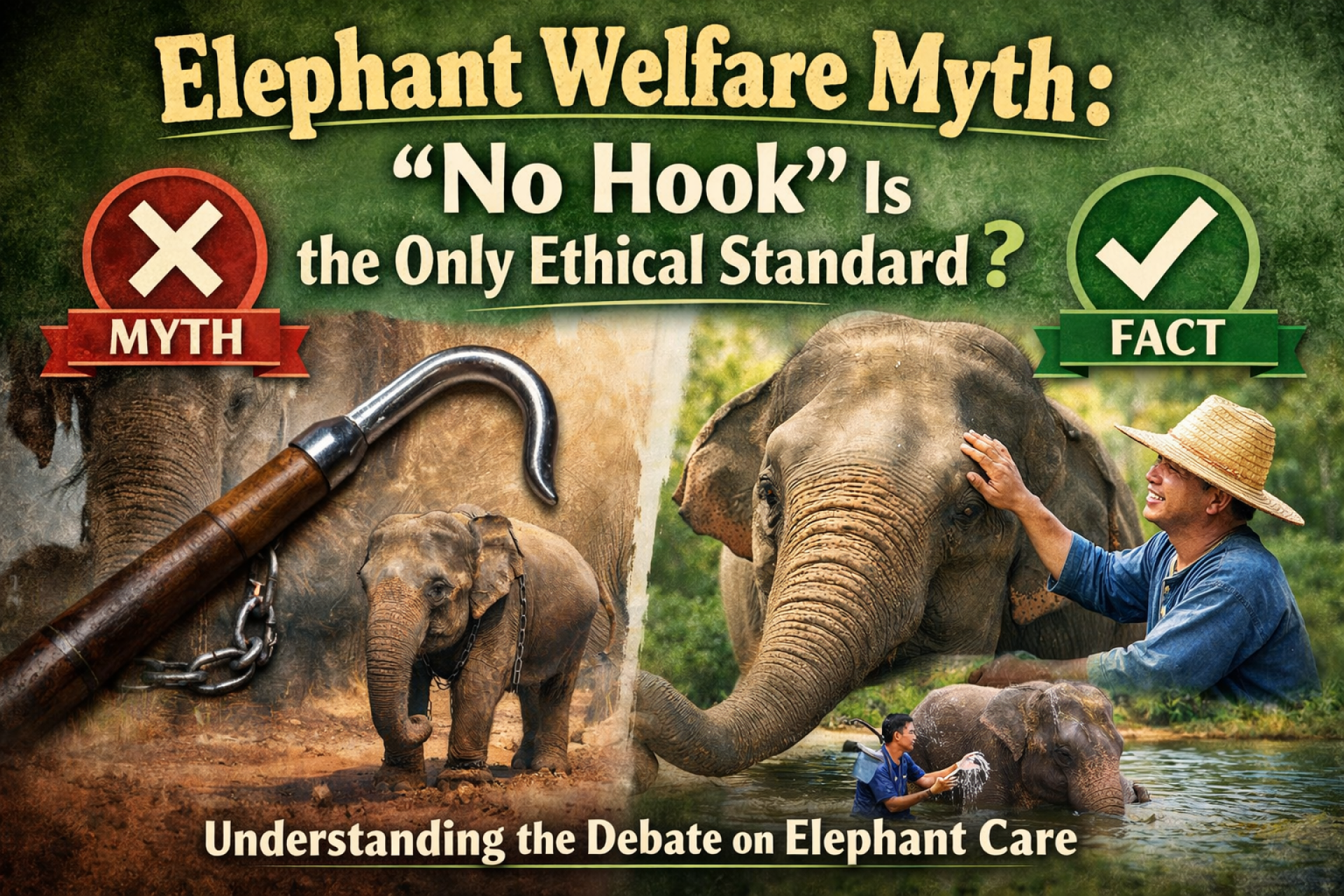
What Is an Elephant Hook?
An elephant hook is a traditional tool used by mahouts (elephant handlers) that helps communicate direction and guide elephants. It has been part of traditional elephant handling (Thai khanabal) for many years.
Understanding the Myth
Many advocates and tourists see any form of tool or restraint—such as hooks or chains—as inherently unethical. The idea is that no hook = good and any hook = abuse. But this binary view is misleading.
According to expert veterinarians and wildlife specialists in Thailand, including those quoted in MGR Online, the presence or absence of hooks alone does not determine welfare. What matters is how tools are used, why they are used, and whether the overall welfare of the elephant—including safety and psychological comfort—is prioritized.
Traditional Use vs. Cruel Abuse
In Thai elephant handling tradition (khanabal), tools like hooks or chains were historically used to guide elephants safely and prevent harm, not to injure them.
In practice, the controlled, careful use of tools helps mahouts manage large animals safely, especially in situations of fear, danger, or aggression.
Tools are not inherently abusive, but abusive use (e.g., violent striking, causing wounds, or using tools without training) is harmful and unethical.
The article explains that even advocates of strict “no hook” policies may inadvertently hide harmful practices—or worse, create situations where untrained animals are difficult to control and potentially dangerous.
What Science and Experts Say
Experts emphasize that true welfare standards focus on animal health, safety, behavior, stress, environment, and the capability of caregivers to handle elephants responsibly — not simply on the absence of a single tool.
They note that:
Elephants that have never been trained with tools like hooks may be unsafe to manage, especially in emergencies when rapid direction or control is needed.
Proper welfare demands knowledgeable handlers, appropriate training, and tools used only to communicate rather than harm.
Misleading claims that all hooks must be banned absolutely ignore the reality that well-trained animals and handlers can coexist safely and humanely.
A Wider Perspective on Welfare
Animal-welfare organizations also distinguish between different contexts of tool use. For example, in some high-welfare sanctuaries, hooks are not needed during routine visitor interactions, but they may still be present for emergency control only. This highlights a balanced approach rather than a simplistic ban.
Conclusion: Tools Are Not the Whole Story
The belief that no hook is the only ethical standard is a myth. What matters most for elephant welfare is:
✅ Overall care quality
✅ Skilled and compassionate mahouts
✅ Safe environments
✅ Proper rest, food, and veterinary access
✅ Humane use of any handling tools — when and only if necessary
Welfare should be evaluated by behavioral science, veterinary insight, and ethical practice, not by a single rule about tools.
By understanding the full context and consulting scientific and expert sources, travelers can make more informed decisions about elephant tourism and support truly responsible care.
Reference:
MGR Online. ความเข้าใจผิดและข่าวเท็จกับความจริงทางวิทยาศาสตร์ของการเลี้ยงช้าง.https://mgronline.com/daily/detail/9690000010582?fbclid=IwY2xjawPue6ZleHRuA2FlbQIxMQBzcnRjBmFwcF9pZBAyMjIwMzkxNzg4MjAwODkyAAEemEb9GqxVSm_0C4OnfwlpRplo3_PsmXqz5Stxe-r2rbXJB0bLKYWZdnItnio_aem_AB_60j53ZEpeLQajGZdTSw#google_vignette
An elephant hook is a traditional tool used by mahouts (elephant handlers) that helps communicate direction and guide elephants. It has been part of traditional elephant handling (Thai khanabal) for many years.
Understanding the Myth
Many advocates and tourists see any form of tool or restraint—such as hooks or chains—as inherently unethical. The idea is that no hook = good and any hook = abuse. But this binary view is misleading.
According to expert veterinarians and wildlife specialists in Thailand, including those quoted in MGR Online, the presence or absence of hooks alone does not determine welfare. What matters is how tools are used, why they are used, and whether the overall welfare of the elephant—including safety and psychological comfort—is prioritized.
Traditional Use vs. Cruel Abuse
In Thai elephant handling tradition (khanabal), tools like hooks or chains were historically used to guide elephants safely and prevent harm, not to injure them.
In practice, the controlled, careful use of tools helps mahouts manage large animals safely, especially in situations of fear, danger, or aggression.
Tools are not inherently abusive, but abusive use (e.g., violent striking, causing wounds, or using tools without training) is harmful and unethical.
The article explains that even advocates of strict “no hook” policies may inadvertently hide harmful practices—or worse, create situations where untrained animals are difficult to control and potentially dangerous.
What Science and Experts Say
Experts emphasize that true welfare standards focus on animal health, safety, behavior, stress, environment, and the capability of caregivers to handle elephants responsibly — not simply on the absence of a single tool.
They note that:
Elephants that have never been trained with tools like hooks may be unsafe to manage, especially in emergencies when rapid direction or control is needed.
Proper welfare demands knowledgeable handlers, appropriate training, and tools used only to communicate rather than harm.
Misleading claims that all hooks must be banned absolutely ignore the reality that well-trained animals and handlers can coexist safely and humanely.
A Wider Perspective on Welfare
Animal-welfare organizations also distinguish between different contexts of tool use. For example, in some high-welfare sanctuaries, hooks are not needed during routine visitor interactions, but they may still be present for emergency control only. This highlights a balanced approach rather than a simplistic ban.
Conclusion: Tools Are Not the Whole Story
The belief that no hook is the only ethical standard is a myth. What matters most for elephant welfare is:
✅ Overall care quality
✅ Skilled and compassionate mahouts
✅ Safe environments
✅ Proper rest, food, and veterinary access
✅ Humane use of any handling tools — when and only if necessary
Welfare should be evaluated by behavioral science, veterinary insight, and ethical practice, not by a single rule about tools.
By understanding the full context and consulting scientific and expert sources, travelers can make more informed decisions about elephant tourism and support truly responsible care.
Reference:
MGR Online. ความเข้าใจผิดและข่าวเท็จกับความจริงทางวิทยาศาสตร์ของการเลี้ยงช้าง.https://mgronline.com/daily/detail/9690000010582?fbclid=IwY2xjawPue6ZleHRuA2FlbQIxMQBzcnRjBmFwcF9pZBAyMjIwMzkxNzg4MjAwODkyAAEemEb9GqxVSm_0C4OnfwlpRplo3_PsmXqz5Stxe-r2rbXJB0bLKYWZdnItnio_aem_AB_60j53ZEpeLQajGZdTSw#google_vignette

Related Content

Why do Chokchai Elephant Camp still has an elephant riding? In our concept of "better mahout life, better elephant care".

Chokchai Elephant Camp in Chiang Mai welcomes Baby Nappa, a newborn female elephant born to mother Molopo, bringing joy and hope to the herd.
Did you know that elephants are not only majestic, but also highly intelligent creatures?


